Connectivity is a weather pattern
In many growing regions, mobile coverage is uneven: monsoon weeks, remote blocks, polyhouse clusters at the edge of a tower’s range. If irrigation or climate only runs when the cloud answers, you don’t have automation—you have a dependency.
What must keep running locally
A serious farm controller should continue, without an uplink:
- Active schedules and sequences
- Safety interlocks (dry-run, over-current, door/fault inputs where wired)
- Last-known setpoints for climate and irrigation
- Local logging that syncs when the link returns
Remote apps should supervise, not be the sole brain.
A pattern that fails in the field
- Operator sets a schedule in a phone app
- Cloud pushes the plan to the device
- Network drops mid-cycle
- Device sits idle—or worse, stuck in a half-finished valve sequence
Farms that lived through that once usually rewrite their requirements: execute on device, sync when possible.
Design choices that protect the crop
- Store schedules on the controller, not only in the dashboard
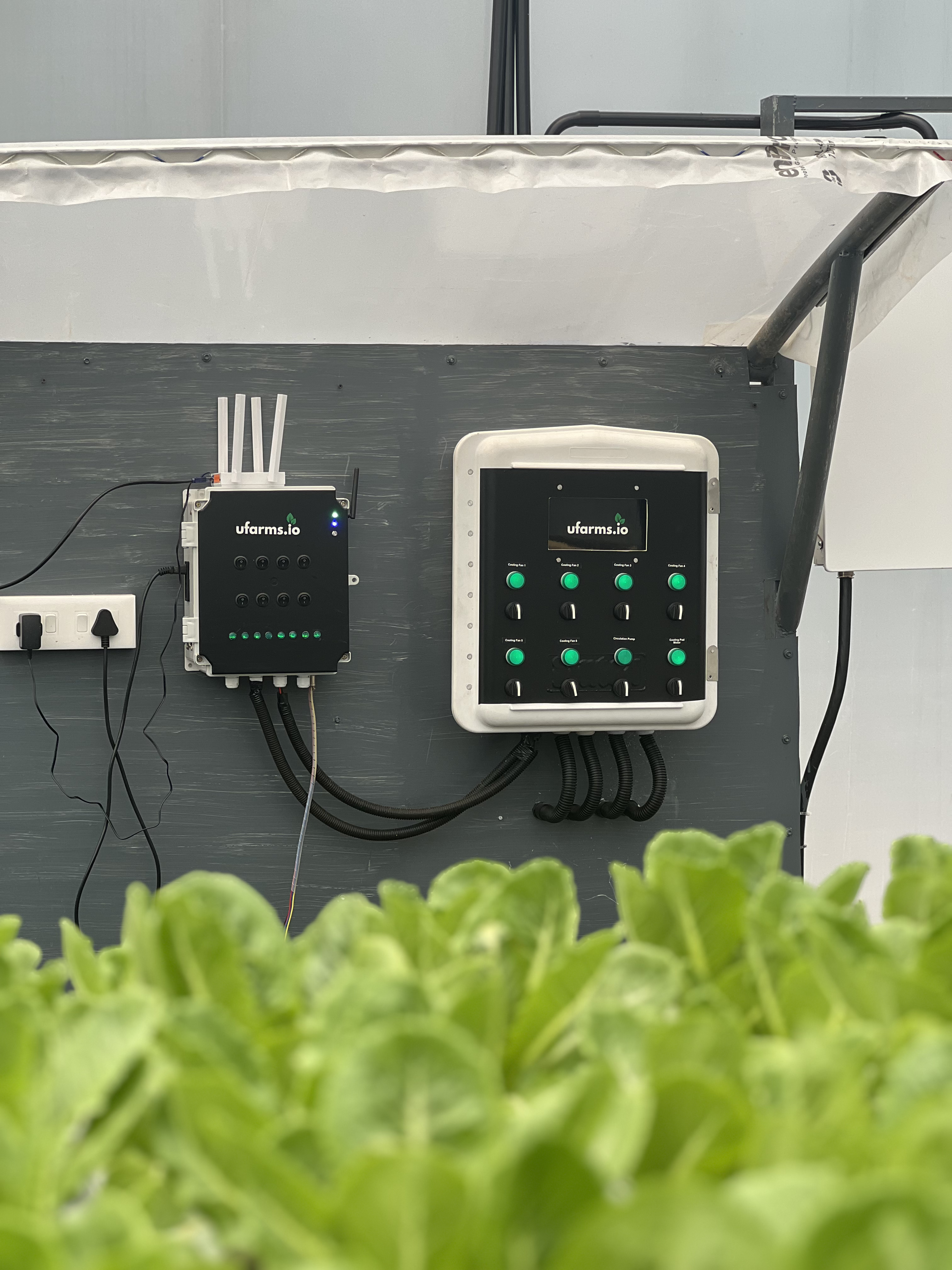
- Confirm critical actions locally (pump start, valve open) with clear status LEDs or HMI
- Queue telemetry so history isn’t lost during an outage
- Alarm locally (buzzer/relay) even if push notifications can’t send
How Ufarms thinks about it
Our controllers are built for Indian farm realities: intermittent networks, multi-zone operations, and operators who need the system to keep working while they’re in another bay. Visibility from the phone is a feature. Continuity in the field is the product.
Checklist before you buy “smart” irrigation
Ask the vendor:
- Does the schedule run if Wi‑Fi/4G is down for 24 hours?
- Can an operator start/stop a zone at the panel without the app?
- What happens to a mid-cycle sequence on power restore?
- How do alarms behave offline?
If those answers are vague, the crop is taking the risk—not the software roadmap.